Marl — a small pottery
Most small-shop templates photograph the product at the size of a postage stamp and then spend the rest of the page on the checkout. Marl does it the other way round.
Four products with stock, options and shipping; add-to-cart on the listing for the person who already knows; a detail page for the person who wants to know what stoneware weighs. The cart and the checkout are in the site's own clothes, not a payment provider's.
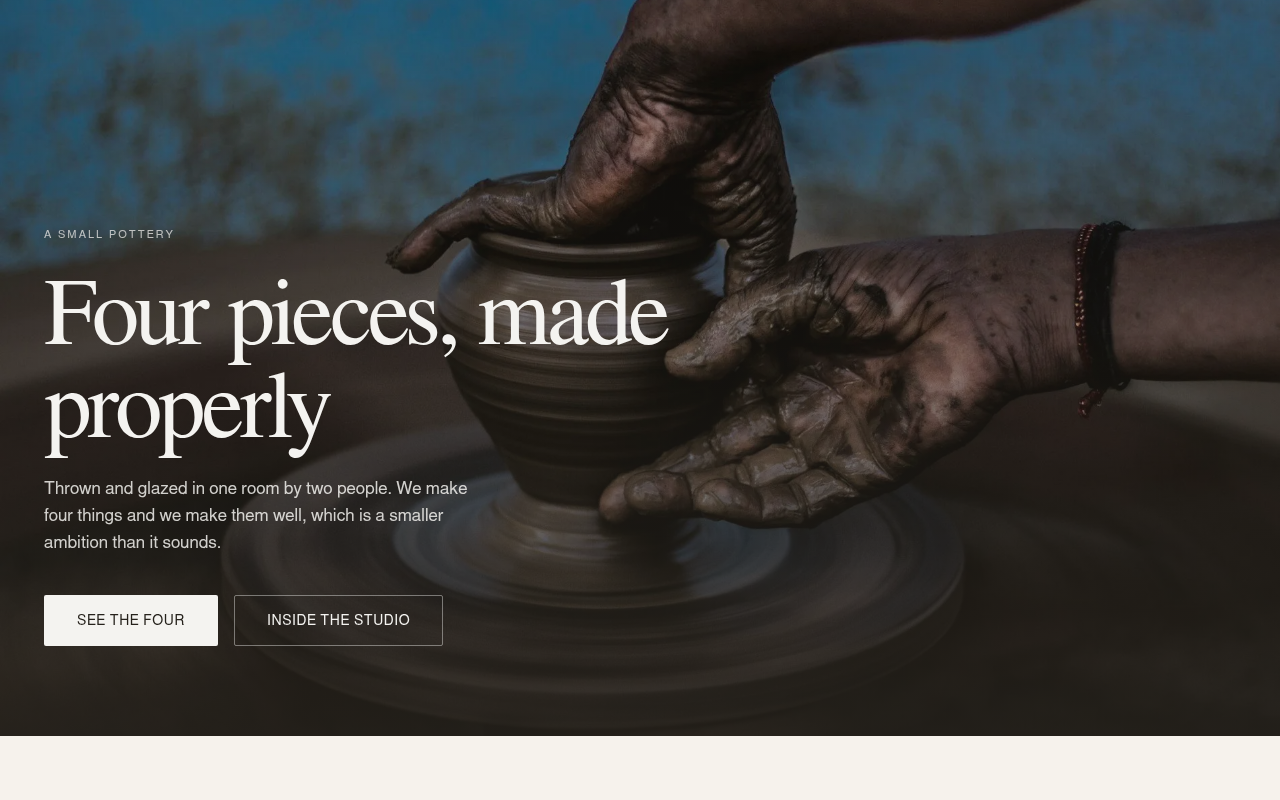
Swap the four objects for yours. The shop does not need to be big to be worth having.

Every one of these was somebody’s Tuesday afternoon.
Twelve starting pointsYou are copying a site, not a wireframe.
Whichever one you pick, it lands in your account with its pages, its brand tokens, its content and every module the design depends on already configured. Nothing is shared with the original — change the prices on day one and no other site moves.
Three more, chosen by nobody.
The index is generated from the same twelve entries, so it is never out of date and nobody has to remember to update it.
Nightjar — a box office
Coalhouse — a band
Grainline — sell a file
Change the words.
Keep the machinery.
Or start from an empty page and build it yourself — by hand, or by describing it to an agent.