
It does rather more
than sit there.
A website that only describes the business leaves the work for you. This one takes the enquiry, holds the table, sells the thing and files the result — and then tells you about it in one place.
Nine chapters, and nothing you have to bolt on.
The message arrives, and it stays arrived.
Build as many forms as the business needs — a quote request with eleven fields, a callback with two. Each one has its own address, its own confirmation wording and its own spam protection. Every submission is kept, exportable and searchable, so an enquiry never lives only in an inbox somebody has stopped reading.
Availability that belongs to you.
A service is a thing somebody books; a resource is the thing it uses — a table, a chair, a room, a van, a member of staff. Say how many you have and when they are free, and the site does the arithmetic: overlaps, minimum stays, buffers, add-ons, deposits and the change of mind three days later.
A shop, or a single file.
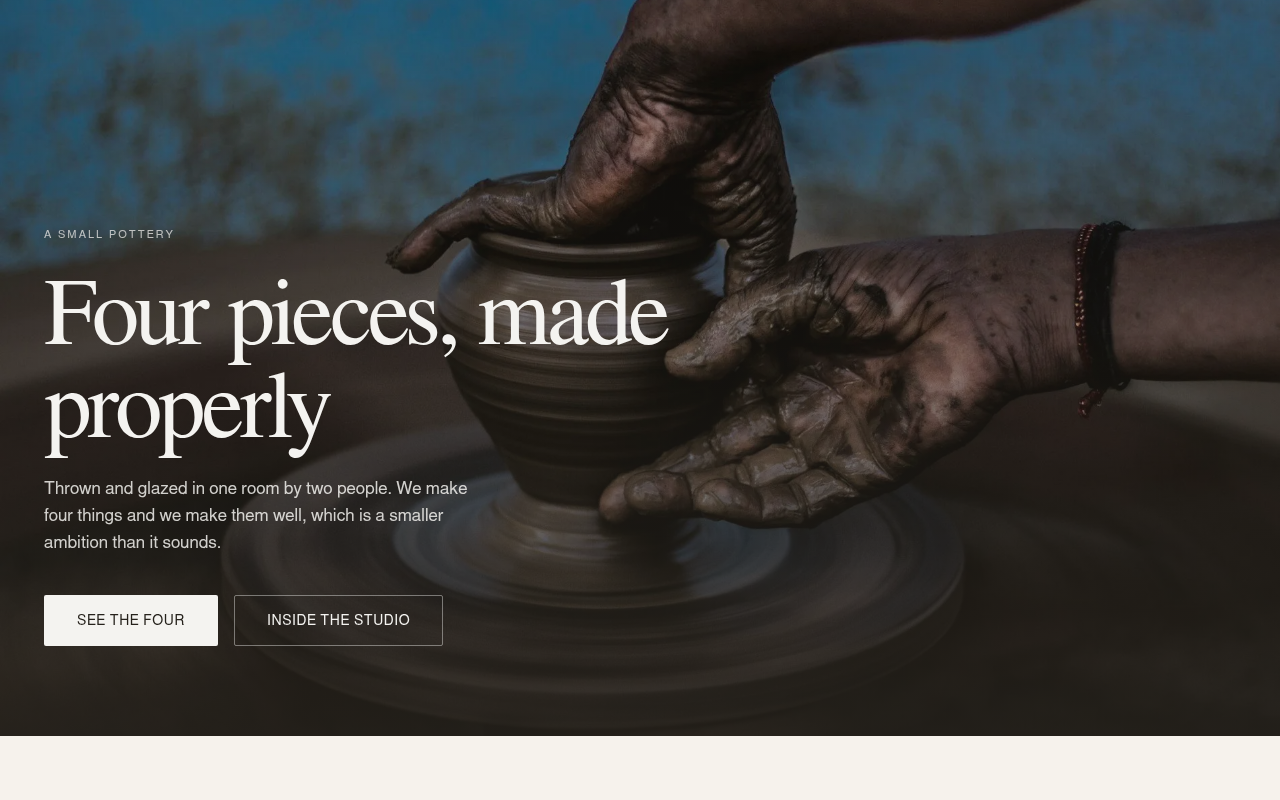
Physical products carry stock, options and shipping. Digital ones are held privately and released the moment the payment clears — no emailing a link and hoping. Subscriptions, tickets and bookings all use the same basket, so a customer buying a workshop place and a bag of clay pays once.

Nine subscriptions, four logins and a spreadsheet is not a system. It is a habit.
Why this is one productSay it once. Serve it twice.
A content type is a shape you define once — an article, a dish, a treatment, a room, a case. Entries fill the shape, and the index page and the individual pages are generated from them. Nothing is duplicated, so nothing drifts out of step.
A second language is an overlay on the page you already made, served under its own URL and indexed separately. Translate it yourself, or have it drafted and then correct the four sentences that matter. The layout never forks.
Ask for the change, in the place you already work.
PageWebPro speaks the Model Context Protocol. Connect Claude, ChatGPT or the agent in your code editor and it gets the same one hundred and twenty tools your own account has, behind the same permission checks — read only, or read and write, on the sites you choose. There is no private back door: this site was built through it.
List the pages, read a block, fetch the settings, take a screenshot of what it just changed.
Create pages, edit blocks by path, upload images, set the brand, publish an article, add a booking service.
Products, orders, bookings, tickets and attendees — the same objects the dashboard shows you.
Attaching a domain, and anything to do with billing. Those stay in your hands, deliberately.
Colour, type and spacing as decisions — not as a thousand overrides.
Set three colours and the rest of the palette is derived to stay readable against them; every block on every page follows. Pick your typefaces and the weights come with them. Change your mind in a year and the whole site changes with you, including the pages you have forgotten about.
Included, and then never mentioned again.
European hosting and a global image cache. No invoice that scales with a good month.
TLS issued and renewed for your domain without you doing anything about it.
Uploaded once, served at the size and the format each device actually asked for.
Cookieless by default — real numbers, and a banner only if you choose to want one.
A cookie banner that gates what it says it gates, on the day you turn one on.
A sitemap and a robots file kept in step with what you have actually published.
Revisions of every page, so a bad Tuesday is one click from being undone.
Comments pinned to the element they are about, for the people with opinions about the photograph.
Export the site, or hand the whole thing to the client. It was always theirs.
One place
for everything.
Nine chapters, one login, one bill. Start with a blank site or with one of the twelve that already work.